LG290p: Random Loss of Galileo HAS Corrections on Firmware 2.01
Hello Quectel team.
I’m still testing the LG290p with the latest firmware version 2.01, and at certain times I’m not achieving the desired accuracy. The HAS corrections stop being received for a while and then restart.
The measurements stop being floating and switch to single mode with accuracies of more than 1 meter.
And then the convergence process starts all over again.
I should clarify that the sky view is good and nothing is obstructing the satellite view.
Some colleagues and I have speculated that atmospheric activity might be interfering with the good results.
You can see atmospheric activity almost in real time on the following website.
Looking at the ionospheric web map, if your area is blue at that time of day, the measurements are quite good, with separations from the control point of less than 20 cm.
If you move to green, yellow, or orange, you will almost certainly have convergence problems and poor results above the 20 cm provided by Galileo HAS.
My specific question is: Is it possible that uncorrected or poorly modeled atmospheric issues are causing poor results at certain times of day?
If so, what can users or Quectel do to mitigate these problems?
HAS corrections lack the ionospheric component until phase 2 (Full Service) is depleted…
whereas e.g. the spanish center monitors the ionosphere in real time…the control and emanation centers are fragmented into various agencies scattered throughout europe and the world.
Describe your setup…
Mine:
-disabled sbas; but (for you) try to enable for all instead $PQTMCFGSBAS,W,01FF*0F not the default one 003F
-elev & signal at zero
-all contellation
-$PQTMCFGPPP,W,2,2,90,0.01,0.01*54 Saludos
I’ve done many tests, and when my country is in blue or very light green on the Global Ionospheric Map, the corrections are applied very well, and I obtain data with errors of less than 20 cm relative to the fixed control point.
Now, since my country is below a greenish, almost yellowish zone, it struggles to switch to floating mode, or it simply doesn’t receive corrections from Galileo HAS, and the age difference increases significantly, sometimes up to the configured 90 seconds. And then I have to start the convergence process all over again.
Just today I started recording NMEA data, which YongHuang requested.
We’ll continue investigating, but I think that in my country, when the ionosphere is disturbed (high TECU values), it will be very difficult to work with Galileo HAS and obtain reliable measurements.
Hi @YongHuang
Question.
I save the NMEA log directly to an SD card in my device, which has an LG290p chip.
I don’t use qgnss. Would that log work for you?
I save 8 or 9 NMEA messages, including GGa and GST.
If it’s useful, I’ll send it to you as soon as I can.
Hi @yonghuang
I’m still having problems with losing Galileo HAS correction reception. I’m using the latest firmware, 2.01.
I get a position in mode 7 (convergence), my radio shows it as floating, and then suddenly the corrections stop flowing with increasing latency.
At some point, I start receiving corrections again and have to start all over. I have fairly clear skies and good visibility overall.
Are there any updates or new firmware available? I’ve had good results with my radio in the past. Ultimately, I can’t leave it collecting data long-term because the corrections keep coming and going, and I don’t have stable positions. Please let me know or send me any new firmware, even if it’s a beta version. I’ve already tried all the previous betas. This is all for a research study.
Regards, Angel
The NMEA log you have sent me for analysis, they will discuss on coming up with a new firmware to improve this issue. But for now the timeline is unknown.
We can further communicate via Email to get a better understand of your requirements
Hi @yonghuang
I took data with an LG290P today, March 3, 2026, at 01:00 UTC in Uruguay under fairly clear skies.
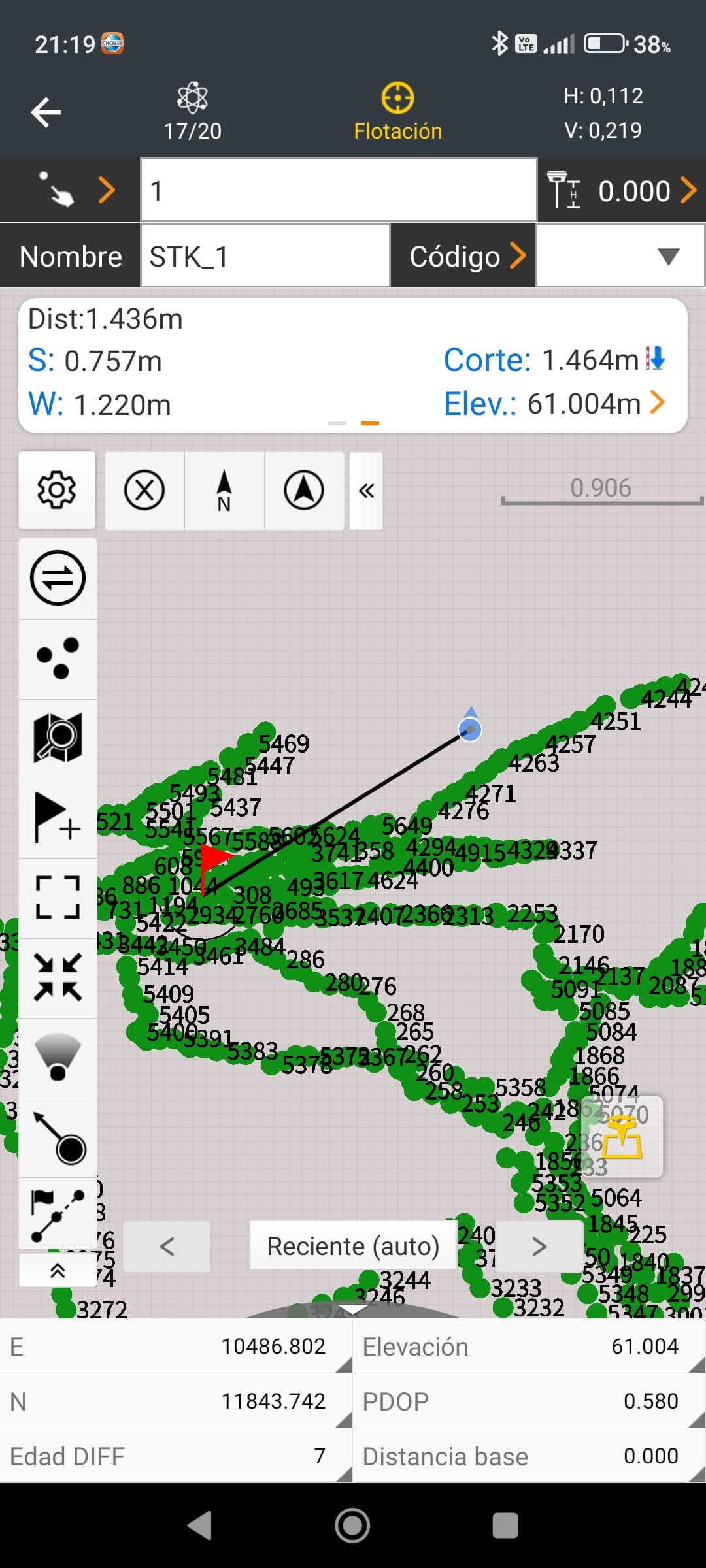
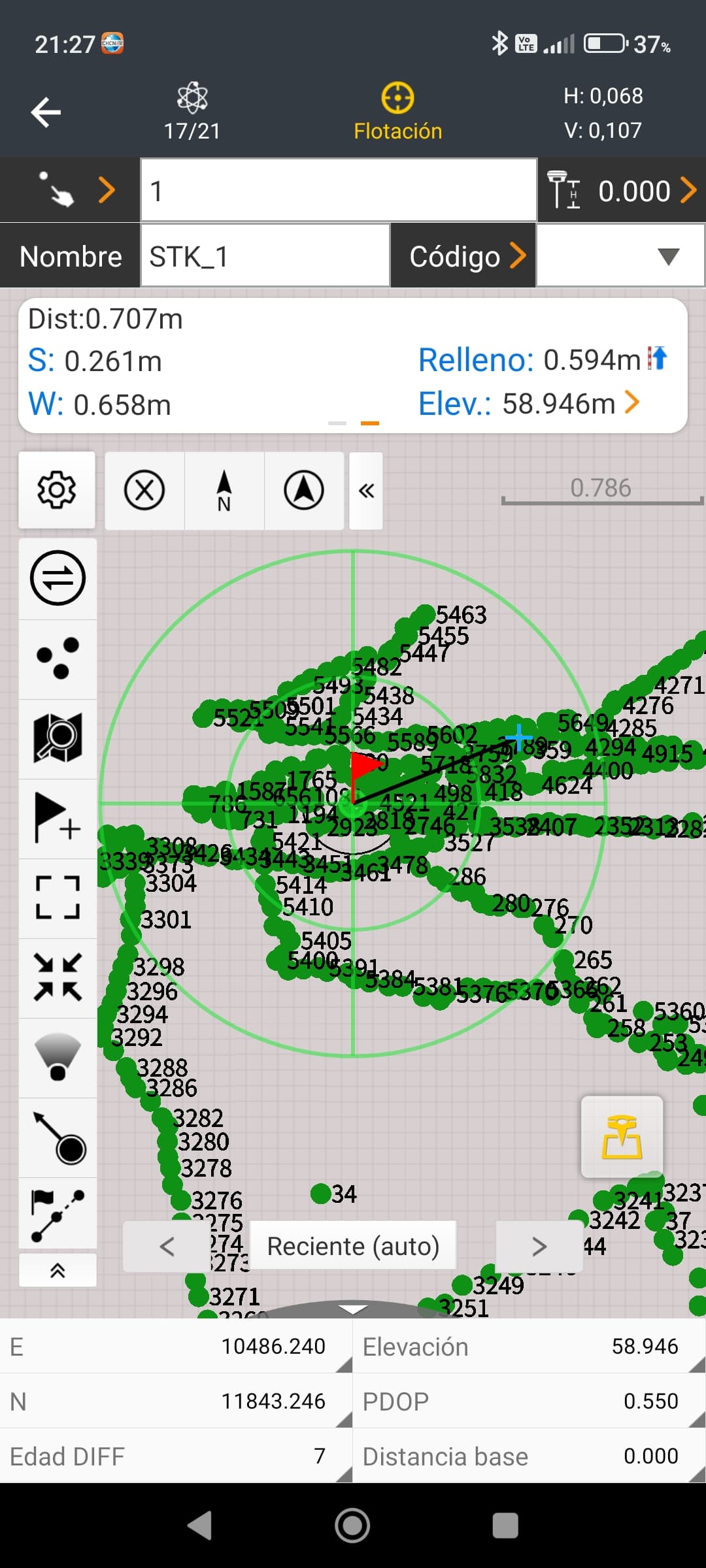
I’m sending screenshots where Landstar 8 reports horizontal accuracies between 6 cm and 11 cm, but the stakeout function reports distances to the fixed point between 70 cm and 1.43 meters.
The coordinates of the fixed point are 10485.58, 11842.99, 59.54 in a local system, obtained from latitude, longitude, and altitude provided by PPP-Canada after sending a Rinex file.
It’s currently nighttime in my country, and ionospheric conditions, according to the NASA map, are quite normal.
Also, the Galileo HAS corrections occasionally stop and reappear later.
I’m continuing to send information to help with future firmware improvements.
Greetings, Angel
Hi @yonghuang, I received your email, but first I’m testing the previous beta version, which I remember working much better.
And indeed, with version LG290P03AANR01A06S_PPP_TEMP1107.pkg I’m getting quite acceptable results, even with high TECU values.
So I’d like to suggest you check what the difference is between the previous version and the current version 2.01.
With this beta version, bug fixes are received without significant interruptions.
So I look forward to your feedback.
Regards, Angel
Hi @yonghuang
As I wrote to you by email, due to increased workload, I won’t be able to perform the tests you requested.
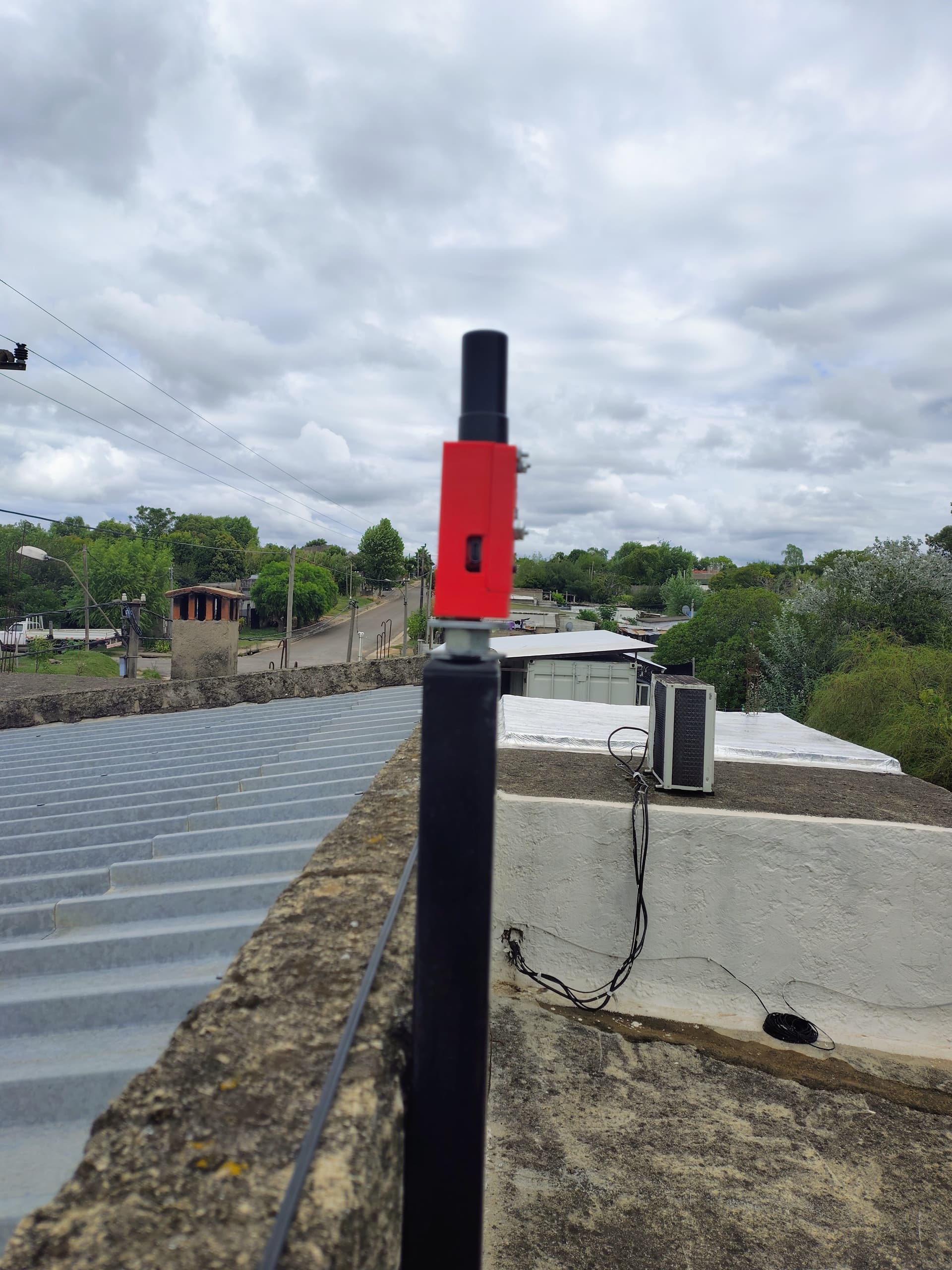
However, I can send you a photo of my base station.
It’s an iron column with very precise coordinates, obtained through post-processing and PPP-Canada.
It’s used to send corrections with professional equipment and works very well for me.
My apologies, I’ll continue when I have more free time.
I contacted Sparkfun to see if they could perform the comparative tests with different firmware.
Regards
Hi @yonghuang
I sent you an email explaining that I’m very busy with work and won’t be able to do the tests in the short term.
I’m still convinced that the latest beta version works better for me than the current version 2.01.
My apologies, and I’ll try to carry out the tests when I can.
Now, is there any news about a new firmware, even a beta version?
Regards